





 RESEARCH USE ONLY
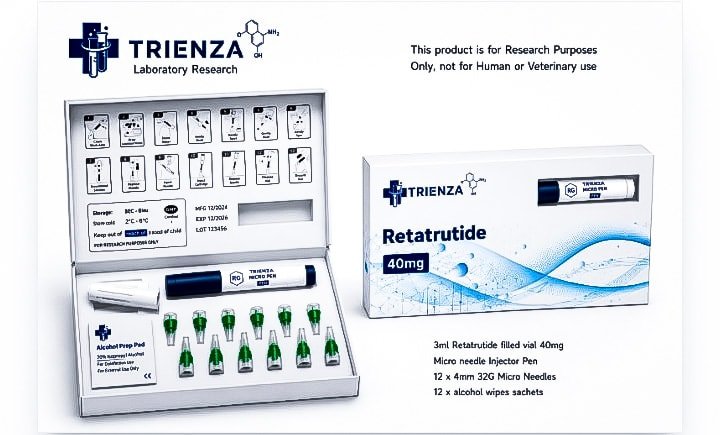
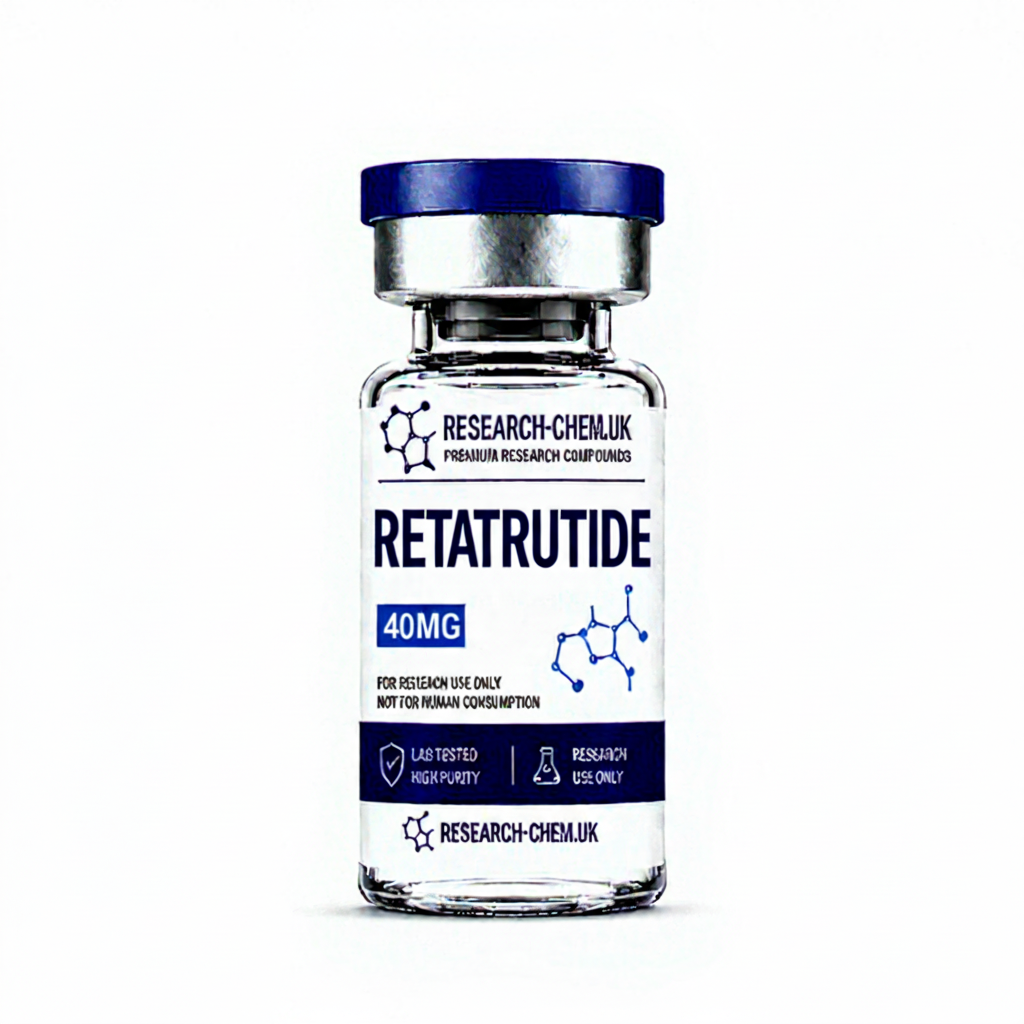
40MG
Retatrutide
40MG · CAS: 2381272-89-3
Certificate of Analysis
Batch HPLC & MS included
UK Dispatch
Shipped next working day
Research Grade
≥98% documented purity
Discreet Packaging
Plain, secure, tamper-evident
Laboratory Research Use Only: This compound is sold exclusively for qualified in-vitro scientific and laboratory investigation. Strictly not intended for human or veterinary administration.
Product Overview
Retatrutide is an investigational research peptide supplied for laboratory and in-vitro research applications. Also identified by the development code LY3437943, retatrutide is a synthetic molecule designed to activate three hormone receptors: GIP, GLP-1 and glucagon.
The compound has attracted considerable scientific interest because of its simultaneous activity across these three metabolic pathways. Research has investigated retatrutide in relation to glucose regulation, energy metabolism, body-weight regulation and other metabolic processes.
Retatrutide remains an investigational compound and should be distinguished from medicines that have already received regulatory approval.
For laboratory and in-vitro research only. Not intended for human or veterinary use. Retatrutide is not presented as a licensed medicine.
What Is Retatrutide?
Retatrutide, also known as LY3437943, is a synthetic peptide-based triple hormone-receptor agonist developed to activate the receptors for glucose-dependent insulinotropic polypeptide (GIP), glucagon-like peptide-1 (GLP-1) and glucagon.
Unlike conventional therapies that target one or two of these receptors, retatrutide has been designed to engage all three pathways through a single molecule. This has made it an important subject of research into metabolic regulation and energy homeostasis.
Clinical and laboratory research has examined retatrutide in relation to glucose metabolism, insulin secretion, glucagon signalling, energy expenditure, body-weight regulation, appetite and metabolic control, lipid metabolism, glycaemic control, cardiometabolic research, and liver and metabolic disease models.
GIP Receptor
Glucose-dependent insulinotropic polypeptide, commonly abbreviated to GIP, is an incretin hormone involved in glucose-dependent insulin secretion and broader metabolic signalling. Activation of the GIP receptor has therefore become an important area of metabolic research.
GLP-1 Receptor
Glucagon-like peptide-1, or GLP-1, is another incretin hormone involved in glucose regulation, insulin secretion and appetite-related signalling. GLP-1 receptor activation is already an established pharmacological research pathway and forms one component of retatrutide's mechanism.
Glucagon Receptor
The third component is the glucagon receptor. Glucagon has an important role in regulating energy availability and glucose metabolism, while also being investigated for its potential influence on energy expenditure and lipid metabolism. Retatrutide's simultaneous activity at these three receptors is the defining feature of the molecule. Research has therefore focused on whether combining these pathways within a single molecule can produce distinctive metabolic effects.
How Is Retatrutide Investigated in Research?
Triple-Receptor Activity
The principal research interest in retatrutide comes from its ability to activate three hormone receptors simultaneously. The molecule combines:
- GIP receptor activity
- GLP-1 receptor activity
- Glucagon receptor activity
This distinguishes retatrutide from single-receptor and dual-receptor agonists.
Glucose Regulation
Research has investigated retatrutide's effects on glucose metabolism and glycaemic control. In a Phase 2 trial involving participants with type 2 diabetes, retatrutide produced dose-dependent reductions in HbA1c compared with placebo. More recent Phase 3 research has continued to investigate retatrutide as a treatment candidate for people with type 2 diabetes.
Body-Weight Regulation
Body-weight change has been one of the most extensively investigated outcomes in retatrutide research. The Phase 2 obesity trial reported substantial, dose-dependent reductions in body weight over 48 weeks. More recently, Phase 3 research has continued to examine retatrutide in people with obesity and related metabolic conditions.
Energy Metabolism
The addition of glucagon-receptor activity to GIP and GLP-1 receptor activation has generated interest in retatrutide as a research tool for studying energy metabolism. Researchers have investigated how these pathways may interact to influence energy expenditure, substrate utilisation and overall metabolic regulation.
Lipid Metabolism
Glucagon and incretin signalling are also relevant to lipid metabolism. Retatrutide research has therefore included investigation of changes in measures associated with metabolic health and lipid handling.
Appetite and Metabolic Signalling
GIP and GLP-1 pathways are associated with appetite and nutrient-response signalling. Research into retatrutide has consequently examined changes in appetite-related and metabolic outcomes alongside its effects on body weight and glucose regulation.
Retatrutide Research Applications
Retatrutide has been investigated across a growing range of metabolic and physiological research areas. Research applications include:
- Metabolic research: investigation of GIP, GLP-1 and glucagon signalling
- Glucose research: experimental investigation of glycaemic regulation
- Insulin research: study of glucose-dependent insulin secretion
- Glucagon research: investigation of glucagon-receptor activity
- Energy metabolism: examination of energy expenditure and substrate utilisation
- Body-weight research: investigation of metabolic regulation and body-weight change
- Appetite research: study of appetite-related hormonal signalling
- Lipid metabolism: investigation of lipid and fatty-acid metabolism
- Diabetes research: experimental and clinical research involving type 2 diabetes
- Obesity research: investigation of metabolic and weight-regulation pathways
- Cardiometabolic research: study of metabolic risk factors
- Liver research: investigation of metabolic liver conditions
- Hormone-receptor research: comparative investigation of single, dual and triple agonists
- Pharmacology: receptor activity, pharmacokinetics and dose-response research
- Peptide research: analytical characterisation and stability studies
- Comparative research: comparison with GLP-1 and GIP/GLP-1 receptor agonists
These applications describe areas of scientific investigation and should not be interpreted as established medical uses.
What Does the Research Say?
Retatrutide has progressed further through clinical research than many compounds commonly described as research peptides. It remains investigational, but published clinical trials have provided substantial evidence regarding its pharmacological activity and effects on metabolic endpoints.
Phase 2 Obesity Research
A major Phase 2 randomised, double-blind, placebo-controlled trial published in the New England Journal of Medicine investigated retatrutide in adults with obesity or overweight accompanied by a weight-related condition. Participants received once-weekly retatrutide at several dose levels or placebo over 48 weeks. The study reported substantial dose-dependent reductions in body weight and identified gastrointestinal events such as nausea, diarrhoea, vomiting and constipation among the reported adverse events. The study provided important evidence supporting further investigation of triple GIP/GLP-1/glucagon receptor agonism.
Type 2 Diabetes Research
A separate Phase 2 trial examined retatrutide in adults with type 2 diabetes. The study found dose-dependent reductions in HbA1c and body weight, with the higher retatrutide doses producing greater changes in these measures. Gastrointestinal adverse events were among the most frequently reported treatment-emergent effects. These results helped inform subsequent clinical development.
Phase 3 Research
Retatrutide has subsequently progressed into Phase 3 clinical development. A 2026 Phase 3 trial, TRANSCEND-T2D-1, evaluated once-weekly retatrutide in adults with type 2 diabetes inadequately controlled by diet and exercise. The study reported significant improvements in HbA1c and body weight across the studied retatrutide doses compared with placebo. Gastrointestinal adverse events were generally mild to moderate and tended to decrease over time. Separate Phase 3 programmes have also been designed to investigate retatrutide in obesity and related conditions, including obstructive sleep apnoea and knee osteoarthritis.
Interpreting the Evidence
The current evidence base is considerably more developed than for many experimental peptides, but retatrutide remains an investigational compound. Researchers should distinguish between:
- Published clinical trial findings
- Pre-clinical pharmacology
- Regulatory approval
- Commercial or anecdotal claims
Clinical-trial results provide useful evidence regarding the molecule's pharmacological activity, but they do not mean that an unapproved research product is equivalent to a regulated pharmaceutical product.
Research References
The following publications provide useful background for researchers investigating retatrutide and triple hormone-receptor agonism:
- Jastreboff AM et al. (2023). Triple–Hormone-Receptor Agonist Retatrutide for Obesity — A Phase 2 Trial. New England Journal of Medicine, 389, 514–526. This randomised Phase 2 trial investigated retatrutide in adults with obesity and examined body-weight changes, safety and dose-response relationships.
- Rosenstock J et al. (2023). Retatrutide, a GIP, GLP-1 and glucagon receptor agonist, for people with type 2 diabetes: a randomised, double-blind, placebo and active-controlled, parallel-group, phase 2 trial conducted in the USA. The Lancet, 402, 529–544. This study investigated glycaemic control and body-weight outcomes in people with type 2 diabetes.
- Bajaj HS et al. (2026). Efficacy and safety of retatrutide, a GIP, GLP-1, and glucagon receptor agonist, in people with type 2 diabetes and inadequate glycaemic control with diet and exercise (TRANSCEND-T2D-1). The Lancet, 407, 2402–2413. This Phase 3 study investigated once-weekly retatrutide in adults with type 2 diabetes.
- Retatrutide clinical development programme. Current Phase 3 research is examining retatrutide across obesity, type 2 diabetes and obesity-related complications.
Researchers should consult the original publications when assessing experimental methodology, participant populations, endpoints, safety findings and study limitations.
Retatrutide Product Specifications
| Property | Specification |
|---|---|
| Product | Retatrutide |
| Development code | LY3437943 |
| Molecular class | Triple hormone-receptor agonist |
| Primary targets | GIP, GLP-1 and glucagon receptors |
| Form | Lyophilised research peptide |
| Product quantity | 40mg |
| Stated purity | 99.6% |
| Analytical testing | HPLC |
| Documentation | Batch-specific Certificate of Analysis |
| Intended use | Laboratory and in-vitro research only |
The applicable Certificate of Analysis should always be consulted for the specific analytical results associated with an individual product batch.
Quality and Purity
Analytical documentation is an important consideration when working with research peptides. Research-Chem.uk provides batch-specific documentation for its research compounds, allowing researchers to review the analytical information associated with the relevant product batch.
For Retatrutide, researchers should refer to the applicable COA for the specific batch supplied, including the reported purity and analytical results. HPLC analysis provides an important analytical method for assessing peptide purity and supporting quality-control procedures.
Researchers should always review the COA corresponding to the particular batch rather than relying solely on general product specifications.
Laboratory Research Applications
Retatrutide may be investigated as a research material in controlled laboratory studies involving:
- GIP receptor research
- GLP-1 receptor research
- Glucagon receptor research
- Triple-receptor agonist research
- Metabolic signalling
- Glucose regulation
- Insulin secretion
- Glucagon signalling
- Energy metabolism
- Appetite-related signalling
- Lipid metabolism
- Diabetes research
- Obesity research
- Cardiometabolic research
- Liver and metabolic research
- Pharmacokinetic studies
- Pharmacological dose-response research
- Peptide stability studies
- Analytical chemistry
- Peptide characterisation
- Comparative hormone-receptor research
The appropriate research methodology and experimental conditions should be established by suitably qualified researchers in accordance with applicable laboratory procedures.
Why Choose Research-Chem.uk?
Research-Chem.uk supplies research-grade compounds intended for controlled laboratory and scientific investigation. For Retatrutide, Research-Chem.uk provides:
- Research-grade Retatrutide (LY3437943)
- 40mg product quantity
- 99.6% stated purity
- Batch-specific COA documentation
- HPLC analytical testing
- Lyophilised product format
- UK-based supply
- Documentation designed to support laboratory research and analytical verification
The availability of batch-specific documentation allows researchers to review the analytical information associated with the particular product batch supplied. Researchers should consult the relevant COA for the most current batch-specific information.
Research-Use Disclaimer
Retatrutide is supplied strictly as a research compound for laboratory and in-vitro scientific investigation.
It is not intended for human consumption, self-administration, veterinary use, diagnosis, treatment, prevention of disease, or any other medical or therapeutic purpose.
Retatrutide (LY3437943) remains an investigational compound. Although clinical research has produced substantial findings regarding its pharmacological activity, safety and effects on metabolic endpoints, these studies do not make an unapproved research product an approved medicine.
The published literature should be interpreted in the context of the specific formulation, dose, route of administration, study population and clinical conditions investigated.
Research findings should not be used as instructions for human administration or as evidence that a research-grade product is equivalent to a regulated pharmaceutical preparation.
Researchers are responsible for ensuring that their use of research compounds complies with all applicable legislation, institutional requirements, laboratory procedures and relevant regulatory standards.
For qualified researchers and controlled laboratory research use only.