








 RESEARCH USE ONLY
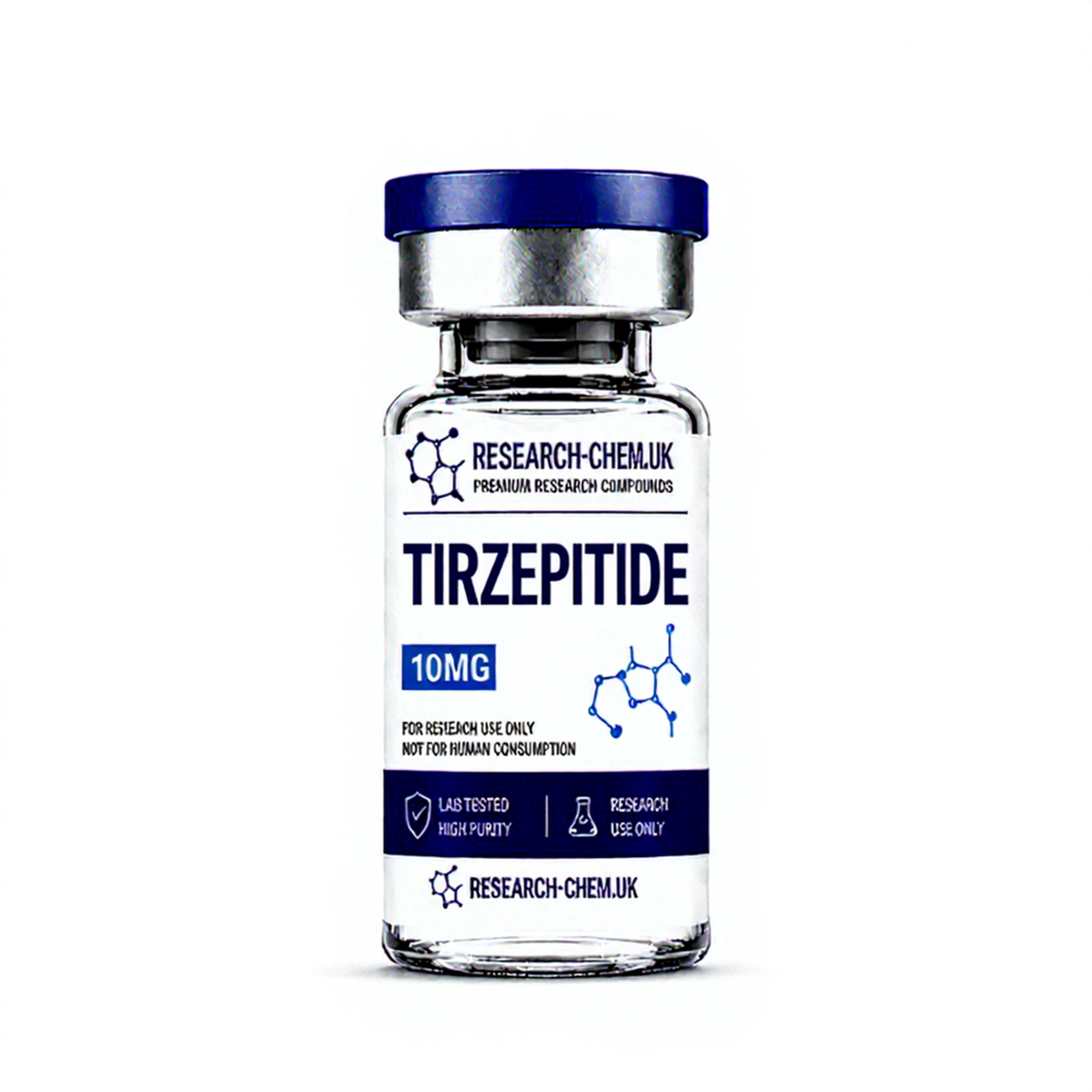
10MG
Tirzepatide
10MG · CAS: 2023788-19-2
Certificate of Analysis
Batch HPLC & MS included
UK Dispatch
Shipped next working day
Research Grade
≥98% documented purity
Discreet Packaging
Plain, secure, tamper-evident
Laboratory Research Use Only: This compound is sold exclusively for qualified in-vitro scientific and laboratory investigation. Strictly not intended for human or veterinary administration.
Product Overview
Tirzepatide is a synthetic peptide-based compound that acts as a dual agonist of the glucose-dependent insulinotropic polypeptide (GIP) receptor and glucagon-like peptide-1 (GLP-1) receptor.
Tirzepatide has been extensively investigated in metabolic and endocrine research, particularly in relation to glucose regulation, insulin secretion, energy metabolism and body-weight regulation. Its dual GIP/GLP-1 receptor activity makes it an important research compound for studying interactions between incretin signalling and metabolic pathways. Research-Chem.uk supplies Tirzepatide as a laboratory research compound intended strictly for in-vitro, analytical and scientific research applications.
| Key Product Features | |
|---|---|
| Product | Tirzepatide |
| Vial | 3ml |
| Peptide Content | 10mg |
| Purity | 98.9% |
| Testing | HPLC verified |
| Documentation | Batch-specific Certificate of Analysis (COA) |
| Application | Laboratory research only |
| Dispatch | UK |
What Is Tirzepatide?
Tirzepatide is a synthetic peptide-based molecule designed to interact with two incretin hormone receptors: GIPR and GLP-1R.
GIP and GLP-1 are endogenous metabolic hormones involved in glucose-dependent insulin secretion and broader metabolic signalling. Tirzepatide was developed with structural modifications that provide prolonged biological activity compared with the naturally occurring hormones.
The molecule contains a modified peptide backbone and a fatty-acid-derived moiety that contributes to its interaction with albumin and extended circulation time.
From a research perspective, Tirzepatide provides a model for investigating dual incretin-receptor activation and the resulting effects on pancreatic, hepatic and metabolic signalling pathways.
How Is Tirzepatide Investigated in Research?
Tirzepatide has been investigated extensively in both preclinical and clinical research. Experimental research has examined:
- GIP receptor activation
- GLP-1 receptor activation
- Insulin secretion
- Glucagon regulation
- Glucose-dependent signalling
- Pancreatic beta-cell function
- Energy metabolism
- Food-intake regulation
- Body-weight regulation
- Lipid metabolism
- Insulin sensitivity
- Cardiometabolic pathways
A major scientific interest in Tirzepatide is its dual receptor activity. Rather than selectively activating only the GLP-1 receptor, Tirzepatide activates both GIP and GLP-1 receptors. This provides researchers with an opportunity to investigate how simultaneous incretin signalling differs from activation of either pathway independently.
Tirzepatide Research Applications
Incretin-Receptor Research
Tirzepatide is particularly relevant to studies investigating the interaction between GIP and GLP-1 receptor pathways. Researchers can examine receptor activation, intracellular signalling and downstream metabolic responses using cellular and biochemical models.
Glucose Metabolism Research
GIP and GLP-1 signalling are closely associated with glucose-dependent insulin secretion. Tirzepatide has therefore been investigated in experimental models examining:
- Glucose homeostasis
- Insulin secretion
- Glucagon signalling
- Pancreatic beta-cell activity
- Insulin sensitivity
Metabolic Research
Tirzepatide has become an important research tool for studying broader metabolic processes. Research has examined effects associated with:
- Energy expenditure
- Nutrient metabolism
- Lipid metabolism
- Adipose-tissue biology
- Insulin resistance
- Body-weight regulation
Appetite and Energy-Balance Research
Central and peripheral incretin signalling contributes to the regulation of food intake and energy balance. Experimental research involving Tirzepatide has therefore examined pathways connecting GIP/GLP-1 receptor activation with appetite and metabolic regulation.
Pharmacokinetic Research
Tirzepatide's molecular structure has been designed to provide prolonged activity. Its fatty-acid-containing structure facilitates albumin binding, making the molecule useful for research into:
- Peptide pharmacokinetics
- Albumin binding
- Plasma persistence
- Molecular stability
- Receptor exposure
- Long-acting peptide design
What Does the Research Say?
Tirzepatide has been investigated extensively as a dual GIP and GLP-1 receptor agonist.
Preclinical research demonstrated that Tirzepatide produces activity at both GIP and GLP-1 receptors and can influence metabolic pathways associated with glucose regulation and energy balance.
In a landmark clinical study published in the New England Journal of Medicine, Frias and colleagues investigated Tirzepatide in adults with type 2 diabetes. The study demonstrated dose-dependent effects on glycaemic measures and body weight while providing important evidence regarding the compound's pharmacodynamic profile.
Subsequent clinical research has expanded the scientific understanding of Tirzepatide across obesity, type 2 diabetes and related metabolic conditions. The SURPASS clinical programme investigated Tirzepatide extensively in type 2 diabetes, while the SURMOUNT programme examined its effects in obesity and overweight populations.
These studies provide a substantial human evidence base for the compound's pharmacological activity. However, the clinical evidence should not be confused with evidence concerning a particular research-grade laboratory batch.
For laboratory researchers, Tirzepatide remains particularly valuable as a model for investigating dual incretin signalling and metabolic regulation.
Research References
-
Frias JP, et al. (2018). Tirzepatide versus Semaglutide Once Weekly in Patients with Type 2 Diabetes. New England Journal of Medicine.
Research examining the pharmacological effects of dual GIP/GLP-1 receptor agonism.
-
Coskun T, et al. (2018). Tirzepatide is a novel dual GIP and GLP-1 receptor agonist. Molecular Metabolism, 18, 3–14.
PMID: 30287187 · DOI: 10.1016/j.molmet.2018.09.004. Preclinical evidence regarding Tirzepatide's dual receptor activity and metabolic effects.
-
Samson SL, et al. (2022). Effects of Tirzepatide on Glycemic Control in Patients With Type 2 Diabetes. New England Journal of Medicine.
SURPASS-6 and related clinical research contributing to the wider understanding of Tirzepatide's metabolic effects.
-
Jastreboff AM, et al. (2022). Tirzepatide Once Weekly for the Treatment of Obesity. New England Journal of Medicine.
Research from the SURMOUNT programme examining Tirzepatide in obesity.
- Tirzepatide — PubChem Compound Database. Chemical and structural information for Tirzepatide, including molecular identification and physicochemical characteristics.
Researchers should consult the original publications when assessing experimental findings, methodology and limitations.
Tirzepatide Product Specifications
| Specification | Details |
|---|---|
| Product Name | Tirzepatide |
| Vial Size | 3ml |
| Peptide Content | 10mg |
| Purity | 98.9% |
| Testing Method | HPLC |
| Receptor Profile | GIP + GLP-1 receptor agonist |
| Physical Form | Lyophilised peptide |
| Intended Application | Laboratory research only |
| Documentation | Batch-specific COA |
Quality and Purity
At Research-Chem.uk, analytical quality and batch traceability are central to our research peptide range.
This Tirzepatide batch is supplied with a stated 98.9% purity, with HPLC analysis used to assess peptide purity. Each batch is supported by a Certificate of Analysis (COA) providing analytical documentation for the supplied material.
Our quality-control approach is designed to give researchers clearly documented materials for controlled laboratory investigations and analytical research. Researchers should always refer to the relevant batch-specific COA when recording analytical characteristics for experimental work.
Laboratory Research Applications
Tirzepatide may be suitable for laboratory investigations involving:
- GIP receptor signalling
- GLP-1 receptor signalling
- Dual incretin biology
- Glucose metabolism
- Insulin signalling
- Pancreatic beta-cell research
- Glucagon regulation
- Metabolic signalling
- Energy-balance research
- Adipose-tissue biology
- Lipid metabolism
- Peptide pharmacokinetics
- Albumin-binding research
- Long-acting peptide design
- Analytical peptide research
Tirzepatide is supplied strictly as a research compound and is not intended to diagnose, treat, cure or prevent any disease or medical condition.
Why Choose Research-Chem.uk?
Research-Chem.uk provides research peptides for laboratories, analytical researchers and other qualified research environments. Our peptide range focuses on:
HPLC-Verified Purity
Peptide products are subjected to analytical purity assessment, with batch-specific documentation available.
Batch Traceability
Products are supplied with Certificate of Analysis documentation to support laboratory record keeping and material identification.
UK Dispatch
Research compounds are dispatched from the UK for efficient domestic delivery.
Research-Only Positioning
Our products are supplied exclusively for legitimate laboratory research and analytical applications.
Clear Product Specifications
Each product page provides defined peptide content, purity information and relevant scientific context where available.
Research-Use Disclaimer
For laboratory research use only. Not for human or veterinary use.
Tirzepatide supplied by Research-Chem.uk is intended strictly for in-vitro laboratory research, analytical testing and scientific investigation.
This product is not a medicine, pharmaceutical preparation, dietary supplement or food product. It is not intended for human consumption, self-administration, diagnosis, treatment, cure or prevention of any disease or medical condition.
The scientific information presented on this page summarises published research concerning Tirzepatide and its pharmacological mechanisms. Research findings should not be interpreted as recommendations for human use or as evidence that a specific Research-Chem.uk batch has been clinically evaluated.
Researchers and laboratories are responsible for ensuring that all use, handling, storage, testing and disposal procedures comply with applicable legislation, institutional requirements and laboratory safety protocols.
For qualified researchers and controlled laboratory research use only.