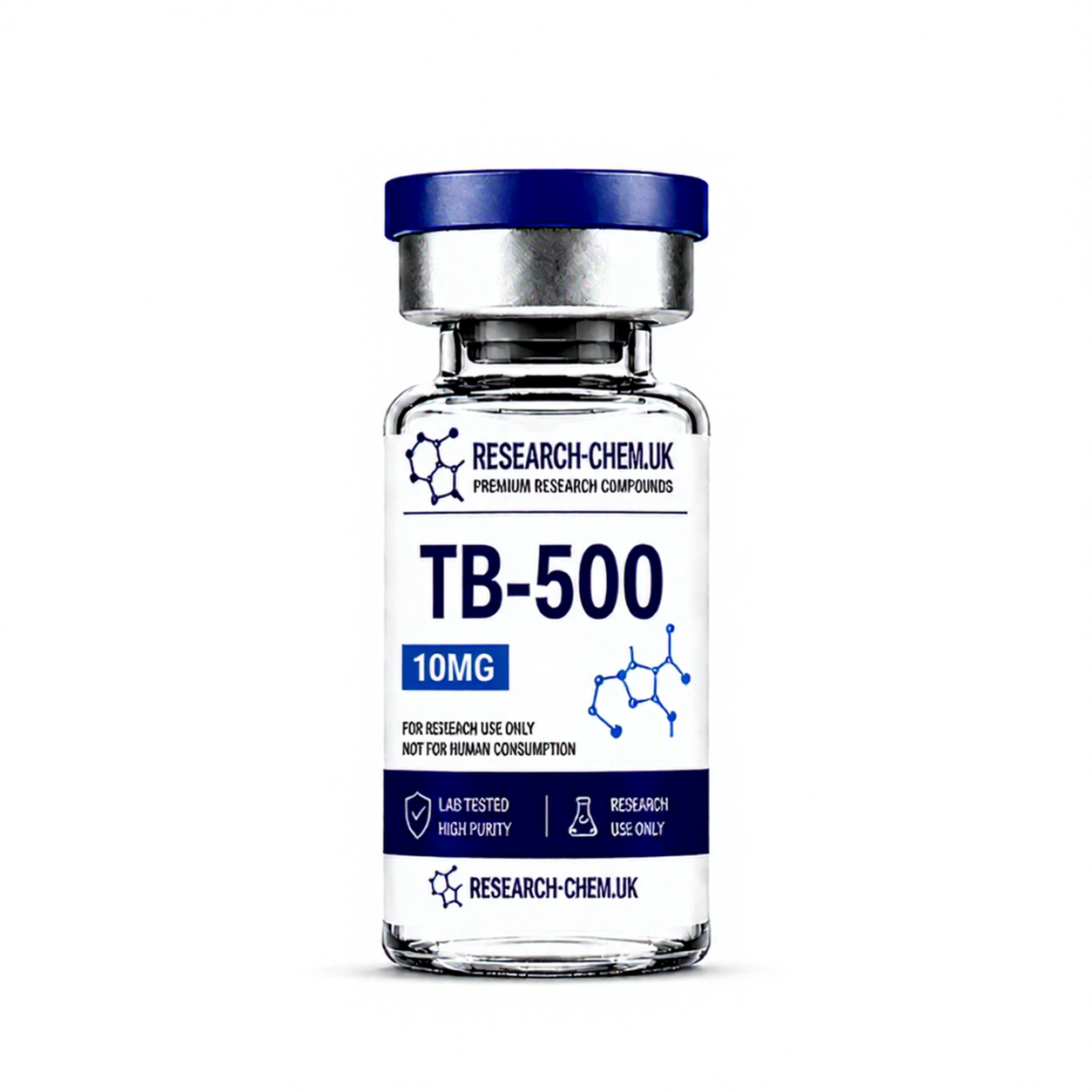



 RESEARCH USE ONLY
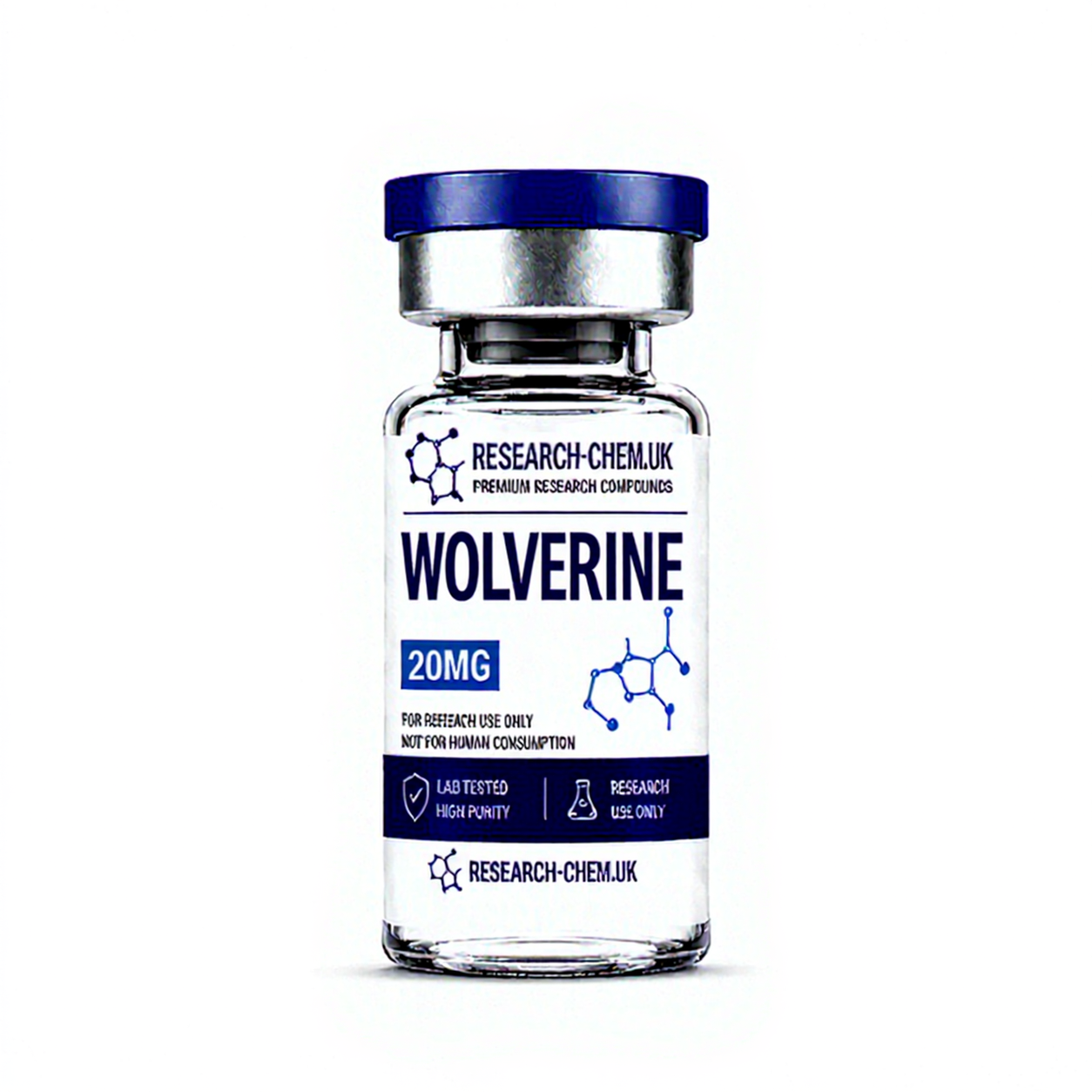
20MG
Wolverine
20MG · CAS: Blend — see CoA
Certificate of Analysis
Batch HPLC & MS included
UK Dispatch
Shipped next working day
Research Grade
≥98% documented purity
Discreet Packaging
Plain, secure, tamper-evident
Laboratory Research Use Only: This compound is sold exclusively for qualified in-vitro scientific and laboratory investigation. Strictly not intended for human or veterinary administration.
Product Overview
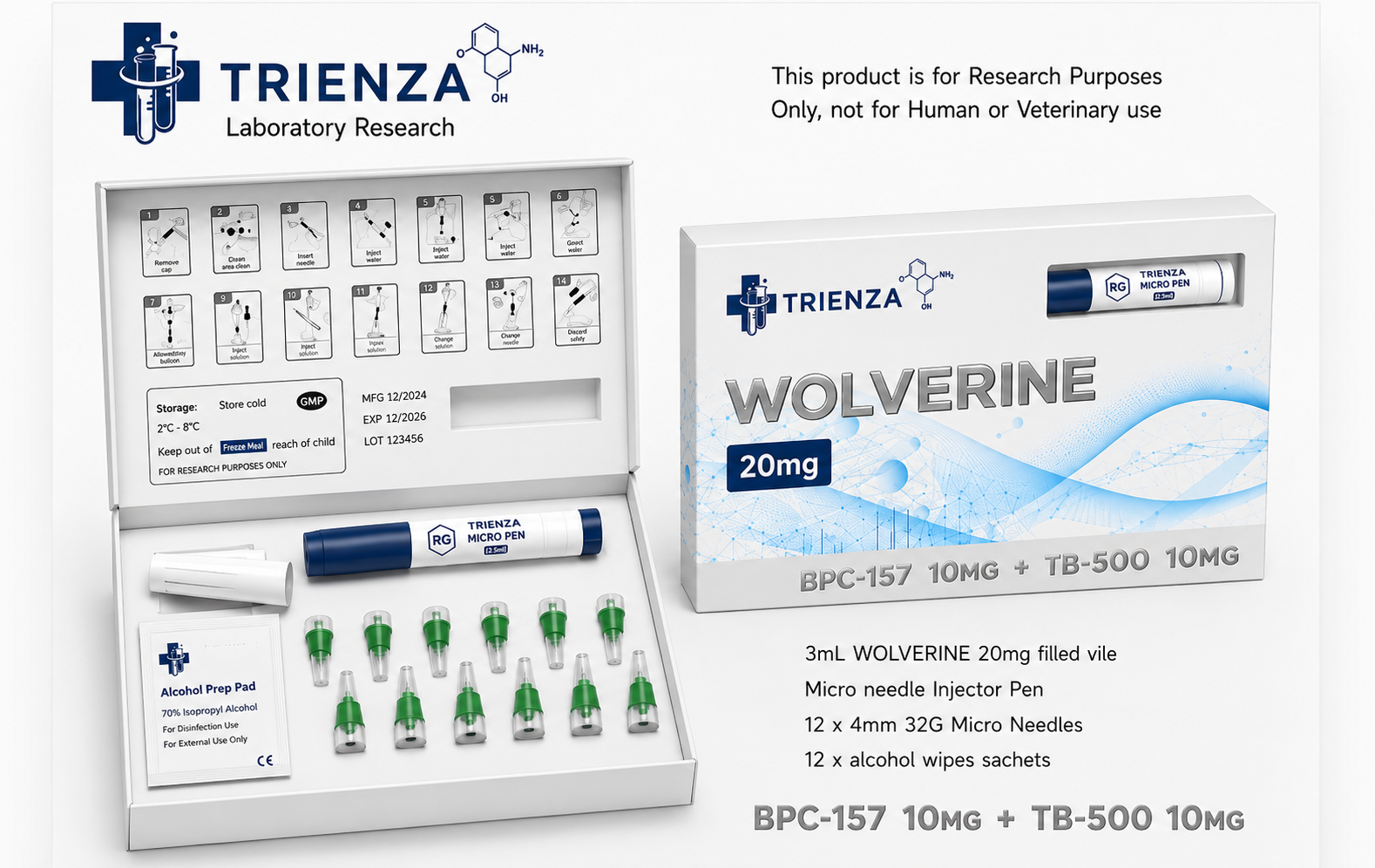
Wolverine is a research peptide blend combining BPC-157 and TB-500 for laboratory and in-vitro research applications. The name Wolverine is commonly used within the research-peptide community to describe this two-peptide combination; it is not the name of a single chemical compound.
BPC-157 and TB-500 are two chemically distinct peptides, each with its own sequence, properties and body of pre-clinical research. The combination is of interest to researchers investigating cellular signalling, tissue biology, cell migration, angiogenesis and related repair mechanisms.
For laboratory and in-vitro research only. Not intended for human or veterinary use. Wolverine is not a licensed medicine.
What Is Wolverine?
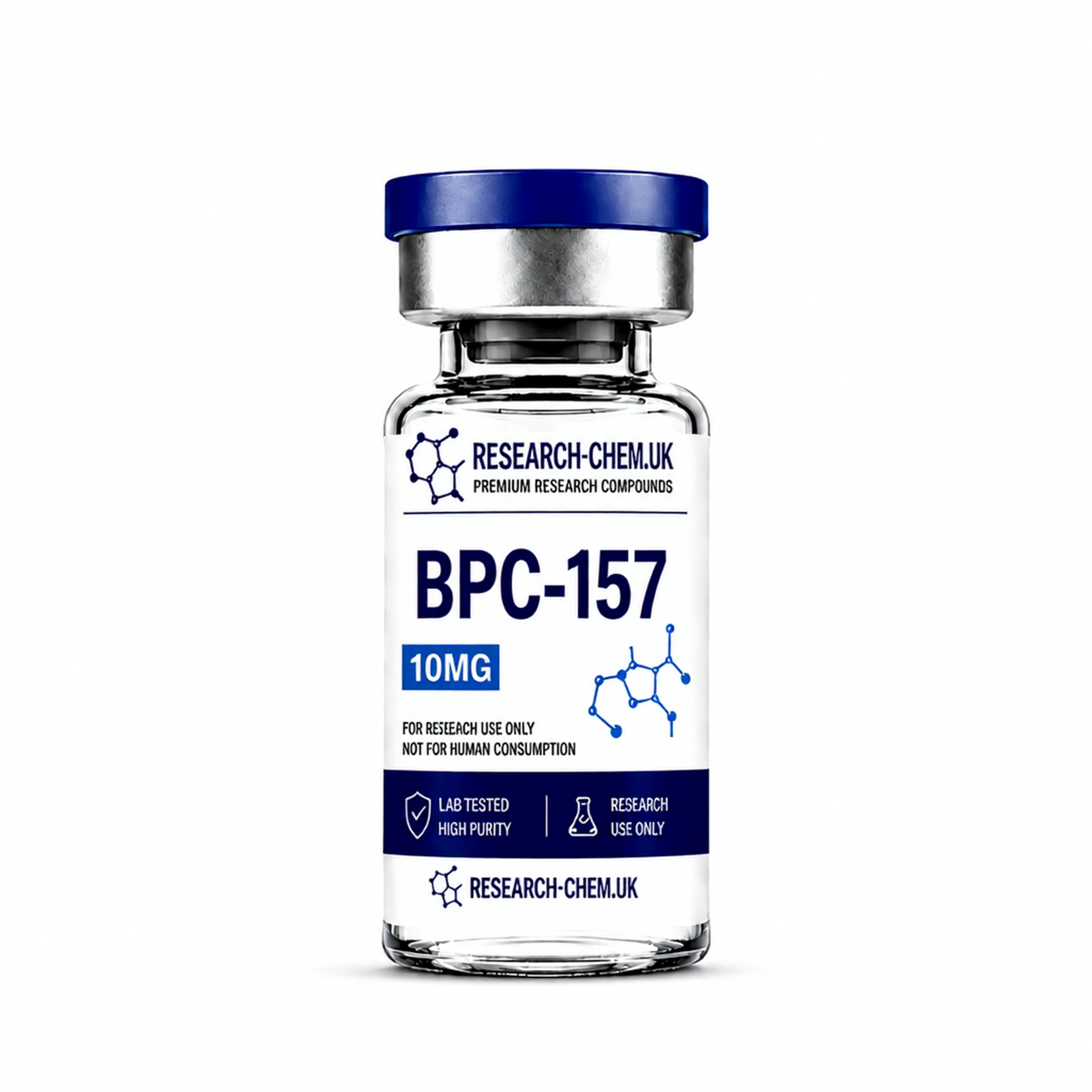
Wolverine is a research blend containing two distinct peptides: BPC-157 and TB-500.
BPC-157 is a synthetic 15-amino-acid pentadecapeptide that has been investigated in a variety of pre-clinical models involving cellular signalling, vascular activity, gastrointestinal biology and connective-tissue research.
TB-500 is a synthetic peptide associated with the actin-binding region of Thymosin β4. Research involving Thymosin β4 and related peptide sequences has examined actin regulation, cellular migration, angiogenesis and tissue-remodelling processes.
The Wolverine name refers to the combination of these two peptides rather than representing a separate chemical entity. Consequently, the blend does not have its own single molecular weight, CAS number or independent chemical identity.
An important consideration when reviewing the research is that much of the scientific evidence relates to the individual components, rather than the exact combined Wolverine formulation. Findings from studies of BPC-157 or Thymosin β4/TB-500 should therefore not automatically be interpreted as evidence for the combination itself.
BPC-157
BPC-157 is a synthetic pentadecapeptide consisting of 15 amino acids, with the sequence GEPPPGKPADDAGLV. Pre-clinical research has investigated BPC-157 in areas including:
- Cellular signalling
- Angiogenic pathways
- Fibroblast activity
- Tendon and ligament research
- Gastrointestinal models
- Oxidative-stress research
- Tissue-remodelling processes
TB-500
TB-500 is associated with the LKKTETQ sequence corresponding to the actin-binding region of Thymosin β4. Research involving Thymosin β4 and related sequences has examined:
- Actin binding
- Cytoskeletal regulation
- Cell migration
- Endothelial-cell activity
- Angiogenesis
- Wound-healing models
- Vascular biology
- Tissue remodelling
These are separate areas of research, and the scientific evidence for each component should be evaluated independently.
How Is Wolverine Investigated in Research?
Research interest in the Wolverine combination comes from the different biological pathways associated with its two constituent peptides.
BPC-157 Research Pathways
BPC-157 has been investigated in experimental models involving vascular and cellular signalling pathways, including research relating to VEGFR2/Akt/eNOS signalling and fibroblast activity. Other studies have examined the peptide in relation to oxidative stress, gastrointestinal tissue and connective-tissue models.
TB-500 and Actin-Related Research
TB-500 is associated with the actin-binding region of Thymosin β4. Thymosin β4 has been extensively investigated as a regulator of monomeric G-actin. This relationship is relevant to research into cytoskeletal organisation, cellular movement and tissue biology. The LKKTETQ region has received particular attention because of its relationship with actin binding and experimental cell-migration and angiogenesis models.
Cell Migration
Both components have attracted research interest in relation to cellular movement, although through different experimental mechanisms. BPC-157 research has examined fibroblast and connective-tissue cell activity, while Thymosin β4 research has investigated endothelial and other cellular migration. This provides a scientific rationale for investigating the two peptides together, but it is important to note that a proposed complementary mechanism is not the same as demonstrated synergy.
Angiogenesis
Angiogenesis is another area of interest across the research literature surrounding both compounds. BPC-157 has been investigated in experimental vascular-signalling models, while Thymosin β4 research has examined endothelial-cell migration, vessel formation and angiogenic responses. However, there is currently no basis for assuming that combining the two produces a greater angiogenic effect than either compound individually without appropriate combination studies.
Wolverine Research Applications
The individual components of Wolverine have been investigated across a broad range of experimental systems. Research areas include:
- Connective-tissue research: tendon, ligament and related cellular models
- Cell migration: fibroblast and endothelial-cell migration studies
- Angiogenesis: vascular and endothelial-cell models
- Actin biology: G-actin binding and cytoskeletal regulation
- Wound-healing research: experimental cellular and tissue models
- Fibroblast research: cellular migration and tissue-remodelling processes
- Vascular biology: endothelial activity and vascular development
- Gastrointestinal research: experimental gastric and intestinal models
- Oxidative-stress research: cellular responses to experimental stress
- Inflammatory research: investigation of inflammatory signalling pathways
- Extracellular matrix research: cell-matrix interactions and remodelling
- Musculoskeletal research: experimental connective-tissue models
- Cardiovascular research: vascular and cardiac laboratory models
- Ocular research: experimental corneal and ocular models
- Comparative peptide research: investigation of different peptide sequences and mechanisms
- Analytical research: peptide identification, purity and metabolite analysis
These applications describe areas of scientific investigation rather than established medical uses.
What Does the Research Say?
The scientific literature surrounding Wolverine needs to be interpreted carefully because BPC-157 and TB-500 have largely been studied as individual compounds.
BPC-157 Research
Pre-clinical studies have investigated BPC-157 across several experimental systems, including tendon, ligament, gastrointestinal and vascular models. Research has explored mechanisms involving cellular migration, vascular signalling and tissue biology. However, much of the BPC-157 evidence remains pre-clinical, with relatively limited controlled human evidence.
TB-500 / Thymosin β4 Research
Thymosin β4 has a considerably larger published research history than TB-500 itself. Research has investigated Thymosin β4 in relation to actin binding, cell migration, angiogenesis, wound-healing biology and vascular development. The LKKTETQ region associated with TB-500 has been identified as an important actin-binding sequence. It is important to distinguish between full-length Thymosin β4 and TB-500 when evaluating these studies. Evidence involving the full-length parent peptide should not automatically be presented as direct evidence for TB-500.
Research Into the Combined Wolverine Blend
The proposed rationale for combining BPC-157 and TB-500 comes from the different areas of research associated with each component. BPC-157 has been investigated in relation to cellular and vascular signalling, while TB-500/Thymosin β4 research has focused substantially on actin regulation and cellular migration. However, evidence involving the individual peptides should not be treated as proof of an effect from the combined Wolverine formulation. A combination would require appropriately designed research using the actual formulation to establish whether the two compounds interact, produce additive effects, or demonstrate any genuine synergy. This distinction is important when interpreting commercial claims surrounding Wolverine.
Research References
The following publications provide useful background for researchers investigating the individual components of the Wolverine blend:
BPC-157
- Sikiric P et al. — Research into BPC-157 and its biological effects across experimental models.
- Staresinic M et al. — Experimental investigation of BPC-157 in tendon-healing models.
- Chang CH et al. — Research examining BPC-157 and signalling pathways associated with tendon fibroblasts.
- Borrelli F et al. — Research into BPC-157 and its potential biological mechanisms.
TB-500 / Thymosin β4
- Philp D, Huff T, Song Gho Y, Hannappel E, Kleinman HK. (2003). The actin binding site on thymosin beta4 promotes angiogenesis. FASEB Journal.
- Ho ENM et al. (2012). Doping control analysis of TB-500, a synthetic version of an active region of thymosin β4.
- Malinda KM et al. Biological activities of thymosin beta4 defined by active sites in short peptide sequences.
- Ying Y et al. (2023). Thymosin β4 and Actin: Binding Modes, Biological Functions and Clinical Applications.
- Rahaman KA et al. (2024). Simultaneous quantification of TB-500 and its metabolites in in-vitro experiments and rats by UHPLC-Q-Exactive Orbitrap MS/MS.
Researchers should consult the original publications when assessing experimental methodology, findings and limitations.
Wolverine Product Specifications
| Property | Specification |
|---|---|
| Product | Wolverine |
| Composition | BPC-157 + TB-500 |
| BPC-157 quantity | See batch COA |
| TB-500 quantity | See batch COA |
| Total peptide quantity | See batch COA |
| BPC-157 purity | See batch COA |
| TB-500 purity | See batch COA |
| Form | Lyophilised research peptide blend |
| Analytical testing | HPLC |
| Documentation | Batch-specific Certificate of Analysis |
| Intended use | Laboratory and in-vitro research only |
The applicable batch Certificate of Analysis should always be consulted for the specific analytical results associated with an individual product batch.
Quality and Purity
Analytical documentation is an important consideration when working with research peptide blends. Research-Chem.uk provides batch-specific documentation for its research compounds, allowing researchers to review the analytical information associated with the relevant product batch.
Because Wolverine contains two distinct peptides, researchers should review the applicable COA for information relating to each constituent rather than treating the blend as a single chemical compound.
Where available, HPLC analysis and supporting analytical documentation provide additional information regarding peptide identity and reported purity. Researchers should always refer to the COA corresponding to the specific batch supplied.
Laboratory Research Applications
Wolverine may be investigated as a research material in controlled laboratory studies involving:
- BPC-157 and TB-500 comparative research
- Cellular migration
- Actin-binding research
- Cytoskeletal regulation
- Fibroblast activity
- Endothelial-cell research
- Angiogenesis models
- Vascular biology
- Wound-healing models
- Connective-tissue research
- Tissue-remodelling studies
- Extracellular matrix research
- Oxidative-stress models
- Inflammatory signalling
- Gastrointestinal research
- Musculoskeletal research
- Comparative peptide analysis
- Peptide characterisation
- Metabolism and metabolite research
The appropriate research methodology and experimental conditions should be established by suitably qualified researchers in accordance with applicable laboratory procedures.
Why Choose Research-Chem.uk?
Research-Chem.uk supplies research-grade compounds intended for controlled laboratory and scientific investigation. For Wolverine, Research-Chem.uk provides:
- BPC-157 + TB-500 research blend
- Batch-specific COA documentation
- HPLC analytical testing
- Research-grade peptide material
- Lyophilised product format
- UK-based supply
- Documentation designed to support laboratory research and analytical verification
The availability of batch-specific documentation allows researchers to review the analytical information associated with the particular product batch supplied.
Research-Use Disclaimer
Wolverine is supplied strictly as a research compound for laboratory and in-vitro scientific investigation.
It is not intended for human consumption, self-administration, veterinary use, diagnosis, treatment, prevention of disease, or any other medical or therapeutic purpose.
Wolverine is not a single chemical entity or an approved medicine. It is a research-community term used to describe a combination of BPC-157 and TB-500.
The scientific literature surrounding the two constituent peptides should be interpreted independently. Research involving BPC-157 alone or Thymosin β4/TB-500 alone should not automatically be considered evidence for the effects of the combined Wolverine formulation.
In particular, claims of synergy between BPC-157 and TB-500 should not be presented as established scientific findings unless supported by research using the actual combination.
Human clinical evidence relating specifically to the Wolverine combination remains limited.
Researchers are responsible for ensuring that their use of research compounds complies with all applicable legislation, institutional requirements, laboratory procedures and relevant regulatory standards.
For qualified researchers and controlled laboratory research use only.