


 RESEARCH USE ONLY
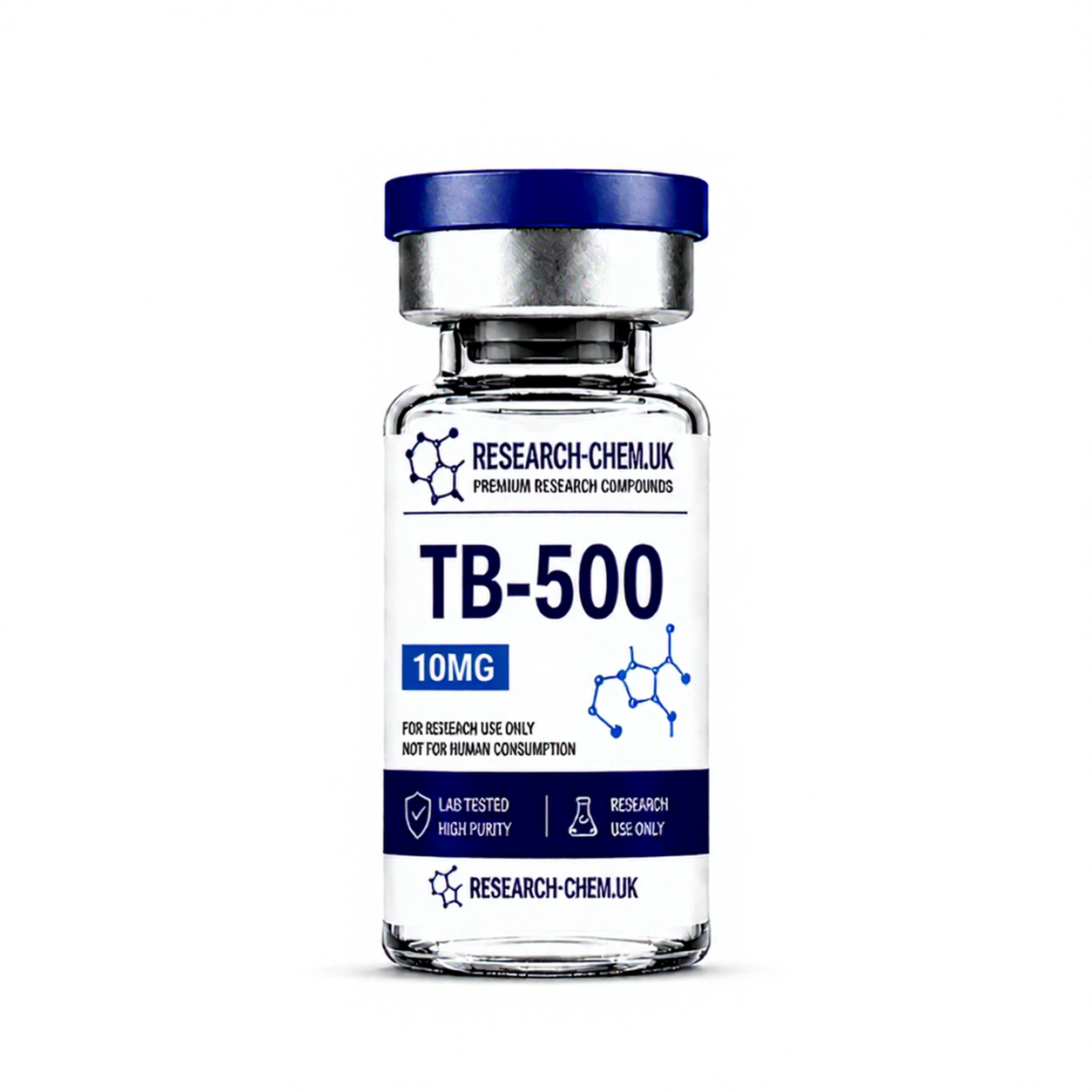
10MG
TB-500
10MG · CAS: 77591-33-4
Certificate of Analysis
Batch HPLC & MS included
UK Dispatch
Shipped next working day
Research Grade
≥98% documented purity
Discreet Packaging
Plain, secure, tamper-evident
Laboratory Research Use Only: This compound is sold exclusively for qualified in-vitro scientific and laboratory investigation. Strictly not intended for human or veterinary administration.
Product Overview
TB-500 is a research peptide supplied in lyophilised form for laboratory and in-vitro research applications. The Research-Chem.uk TB-500 product is supplied at 10mg and has a stated purity of 99.2%, with batch-specific Certificate of Analysis documentation available.
Each batch is subject to analytical testing, providing researchers with supporting documentation relating to peptide identity and purity.
For laboratory and in-vitro research only. Not intended for human or veterinary use. TB-500 is not a licensed medicine.
What Is TB-500?
TB-500 is a synthetic peptide associated with residues 17–23 of human Thymosin β4. The sequence commonly identified with TB-500 is LKKTETQ, with N-terminal acetylation producing the form referred to as acetylated TB-500 in analytical literature.
Thymosin β4 itself is a naturally occurring 43-amino-acid peptide and is one of the principal intracellular proteins involved in regulating pools of monomeric G-actin. Through its interaction with actin, Thymosin β4 has been investigated in connection with cell movement, cytoskeletal organisation and tissue biology.
The central actin-binding region of Thymosin β4 has received particular attention in laboratory research. Studies have identified the LKKTETQ region as an important functional sequence associated with actin binding, endothelial-cell migration and angiogenic activity.
Research into TB-500 and related Thymosin β4 sequences has therefore focused on several areas, including:
- Actin binding and cytoskeletal regulation
- Cellular migration
- Endothelial-cell activity
- Angiogenesis
- Wound-healing models
- Tissue remodelling
- Extracellular matrix activity
- Inflammatory signalling
- Cellular survival and differentiation
Much of the available evidence relates to Thymosin β4 or experimental fragments derived from it, rather than clinical studies of TB-500 itself.
How Is TB-500 Investigated in Research?
Actin Binding
One of the principal areas of interest surrounding TB-500 is its relationship with the actin cytoskeleton. Thymosin β4 functions as a G-actin-sequestering peptide, helping regulate the availability of actin monomers within cells. The LKKTETQ region represents the central actin-binding domain identified within Thymosin β4, making the sequence particularly relevant to laboratory investigations involving cytoskeletal organisation and cell movement.
Cell Migration
Cell migration is another major area of research involving Thymosin β4 and its active regions. Experimental studies have examined endothelial-cell movement, fibroblast activity and other forms of cellular migration. These processes are important to researchers studying tissue remodelling, wound-healing biology and vascular development.
Angiogenesis
Research has also investigated the relationship between Thymosin β4's actin-binding region and angiogenesis. Laboratory experiments have examined endothelial-cell adhesion and migration, capillary formation and vessel sprouting. Research published in the FASEB Journal identified the actin-binding region as an important component of the angiogenic activity observed with Thymosin β4.
Wound-Healing Models
Thymosin β4 has been investigated in experimental wound-healing systems involving cell migration, tissue remodelling and vascular responses. The published literature includes both cell-based and animal studies investigating these processes. These findings provide a basis for further laboratory research, but they should not be interpreted as evidence of established therapeutic effectiveness for TB-500 in humans.
Cytoskeletal Research
Because of the relationship between Thymosin β4 and G-actin, TB-500-related research can also be relevant to studies of the cellular cytoskeleton. Actin polymerisation and depolymerisation are fundamental to processes including cell movement, morphology and structural organisation. Researchers have therefore investigated β-thymosins as regulators of actin availability and cellular behaviour.
Vascular Research
Thymosin β4 has also been examined in relation to vascular development and repair. Research has investigated processes including vasculogenesis, angiogenesis, endothelial migration, vascular remodelling and pericyte recruitment. The underlying mechanisms remain an active area of scientific investigation.
TB-500 Research Applications
TB-500 and related Thymosin β4 sequences have been investigated across a range of experimental systems. Research areas include:
- Actin biology: investigation of G-actin binding and cytoskeletal regulation
- Cell migration: endothelial and other cellular migration models
- Angiogenesis: endothelial-cell activity and vessel formation
- Wound-healing research: experimental dermal and cellular repair models
- Tissue biology: cellular processes associated with tissue remodelling
- Vascular research: endothelial migration and vascular development
- Inflammation: investigation of inflammatory mediators and cellular responses
- Extracellular matrix research: cellular interaction with surrounding matrix structures
- Fibroblast research: migration and activity in experimental models
- Cell survival: investigation of cellular responses under experimental stress
- Stem-cell research: differentiation and cellular development models
- Cardiovascular research: experimental vascular and cardiac models
- Ocular research: investigation of corneal and ocular repair processes
- Musculoskeletal research: experimental tissue and connective-tissue models
- Comparative peptide research: comparison of peptide fragments and related biological sequences
These applications describe areas of scientific investigation rather than established medical uses.
What Does the Research Say?
A substantial amount of the scientific literature surrounding TB-500 relates to Thymosin β4, the naturally occurring peptide from which the TB-500 sequence is derived. This distinction is important when evaluating published evidence.
Thymosin β4 and Actin
Thymosin β4 has been extensively studied as an actin-binding peptide. Research indicates that it binds monomeric G-actin and influences the balance between actin monomers and filament formation. This provides a biological basis for investigating its effects on cellular movement and cytoskeletal activity. The central LKKTETQ region has been identified as an important actin-binding sequence. Experimental work has demonstrated that this region can reproduce aspects of the angiogenic and cell-migration activity associated with Thymosin β4.
Cell Migration and Tissue Biology
Cell migration is a recurring theme within the Thymosin β4 literature. Researchers have investigated how β-thymosins influence cell movement, including endothelial-cell migration and other cellular processes involved in tissue development and repair. However, the mechanisms responsible for these effects are complex and are not completely understood.
Angiogenesis Research
Laboratory studies have reported associations between Thymosin β4 and angiogenic processes. Research has investigated endothelial-cell adhesion, migration, tube formation and vessel sprouting, with the actin-binding region playing an important role in these experimental effects. Further reviews have examined the wider role of Thymosin β4 in vascular development, neovascularisation and vascular responses to injury.
Wound-Healing Research
Animal and laboratory studies have investigated Thymosin β4 in wound-healing models, examining processes such as cell migration, blood-vessel formation, inflammation and tissue remodelling. However, these findings primarily concern Thymosin β4 and related experimental systems. They should not be presented as proof that TB-500 produces equivalent effects in humans.
Research Specifically Examining TB-500
More recent analytical research has examined TB-500 itself, including its metabolism and biological activity in experimental systems. A 2024 study investigated TB-500 and its metabolites using advanced mass-spectrometry techniques. The researchers noted that previously reported wound-healing activity associated with TB-500 may involve metabolites rather than necessarily being attributable to the parent peptide itself. This is an important consideration when interpreting claims surrounding TB-500 and demonstrates why the compound should continue to be evaluated through controlled laboratory research.
Research References
The following publications provide useful background for researchers investigating TB-500, Thymosin β4 and related peptide sequences:
- Philp D, Huff T, Song Gho Y, Hannappel E, Kleinman HK. (2003). The actin binding site on thymosin beta4 promotes angiogenesis. FASEB Journal.
- Esposito S et al. (2012). Synthesis and characterization of the N-terminal acetylated 17–23 fragment of thymosin beta 4 identified in TB-500.
- Ho ENM et al. (2012). Doping control analysis of TB-500, a synthetic version of an active region of thymosin β4.
- Malinda KM et al. (2010). Biological activities of thymosin beta4 defined by active sites in short peptide sequences.
- Ying Y et al. (2023). Thymosin β4 and Actin: Binding Modes, Biological Functions and Clinical Applications.
- Rahaman KA et al. (2024). Simultaneous quantification of TB-500 and its metabolites in in-vitro experiments and rats by UHPLC-Q-Exactive Orbitrap MS/MS.
Researchers should consult the original publications when assessing experimental methodology, results, limitations and the distinction between full-length Thymosin β4 and TB-500.
TB-500 Product Specifications
| Property | Specification |
|---|---|
| Product | TB-500 |
| Product quantity | 10mg |
| Associated peptide | Thymosin β4 fragment |
| Common sequence | LKKTETQ |
| Form | Lyophilised research peptide |
| Stated purity | 99.2% |
| Analytical testing | HPLC |
| Documentation | Batch-specific Certificate of Analysis |
| Intended use | Laboratory and in-vitro research only |
Quality and Purity
Reliable analytical documentation is an important consideration when purchasing research peptides. Research-Chem.uk's TB-500 is listed with a stated purity of 99.2%. Batch-specific analytical documentation is available through the company's COA system, allowing researchers to review the testing information associated with the relevant batch.
The product is supplied as a 10mg research peptide, with HPLC analysis used as part of the stated quality-control process. Researchers should always refer to the COA corresponding to the specific batch they receive rather than relying solely on general product specifications.
Laboratory Research Applications
TB-500 may be used as a research material in controlled laboratory investigations involving:
- Actin-binding research
- Cytoskeletal regulation
- Cellular migration
- Endothelial-cell research
- Angiogenesis models
- Wound-healing models
- Fibroblast activity
- Tissue-remodelling research
- Extracellular matrix studies
- Vascular biology
- Cellular signalling
- Inflammatory pathway research
- Cell-survival studies
- Stem-cell and differentiation research
- Comparative peptide analysis
- Analytical chemistry and peptide characterisation
- Metabolism and metabolite research
The appropriate application, methodology and experimental conditions should be determined by suitably qualified researchers in accordance with applicable laboratory procedures.
Why Choose Research-Chem.uk?
Research-Chem.uk supplies research-grade compounds intended for controlled laboratory and scientific investigation. For TB-500, Research-Chem.uk provides:
- 10mg TB-500 product format
- 99.2% stated purity
- HPLC analytical testing
- Batch-specific COA documentation
- Research-grade peptide material
- Lyophilised product format
- UK-based supply
- Documentation designed to support laboratory research and analytical verification
The availability of batch-specific documentation allows researchers to examine the analytical information relevant to the particular batch supplied.
Research-Use Disclaimer
TB-500 is supplied strictly as a research compound for laboratory and in-vitro scientific investigation.
It is not intended for human consumption, self-administration, veterinary use, diagnosis, treatment, prevention of disease, or any other medical or therapeutic purpose.
TB-500 is not presented as an approved medicine. The scientific information surrounding TB-500 includes research involving Thymosin β4 and related peptide fragments, and findings from these studies should not automatically be interpreted as evidence of equivalent effects, safety or efficacy in humans.
In particular, researchers should distinguish between studies conducted using full-length Thymosin β4 and those specifically using TB-500 or the acetylated LKKTETQ fragment. Current evidence does not justify treating the two compounds as interchangeable.
Human clinical evidence relating specifically to TB-500 remains limited. Laboratory and animal findings cannot automatically be translated into human medical outcomes.
Researchers are responsible for ensuring that their use of research compounds complies with all applicable legislation, institutional requirements, laboratory procedures and relevant regulatory standards.
For qualified researchers and controlled laboratory research use only.